
Copy tradingin Finandy
transparent copying of transactions through the trading terminal with cashback up to 30%
You connect to the strategies of master traders through the trading terminal and see every trade in real time
100,000+
traders trust Finandy
since 2017
in the crypto trading market
$75+ million
daily turnover of our users
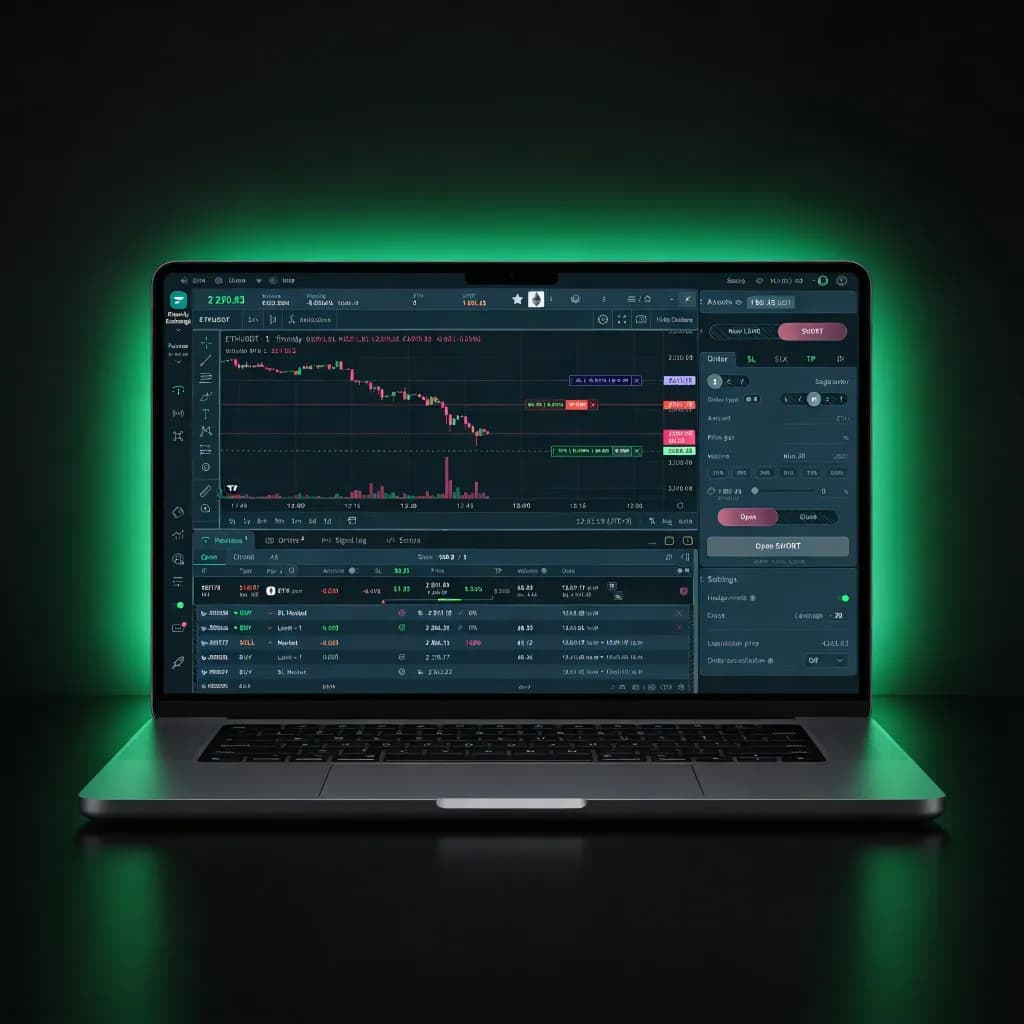
What is copy trading in Finandy
Copy trading is a trading format in which the user connects to the strategy of a master trader, and all transactions are automatically repeated in his portfolio.
In Finandy, copy trading is built not as a showcase “with beautiful percentages”, but as a trading tool. You see the structure of the strategy, the logic of transactions, current positions and real results, and not just numbers in the rating.
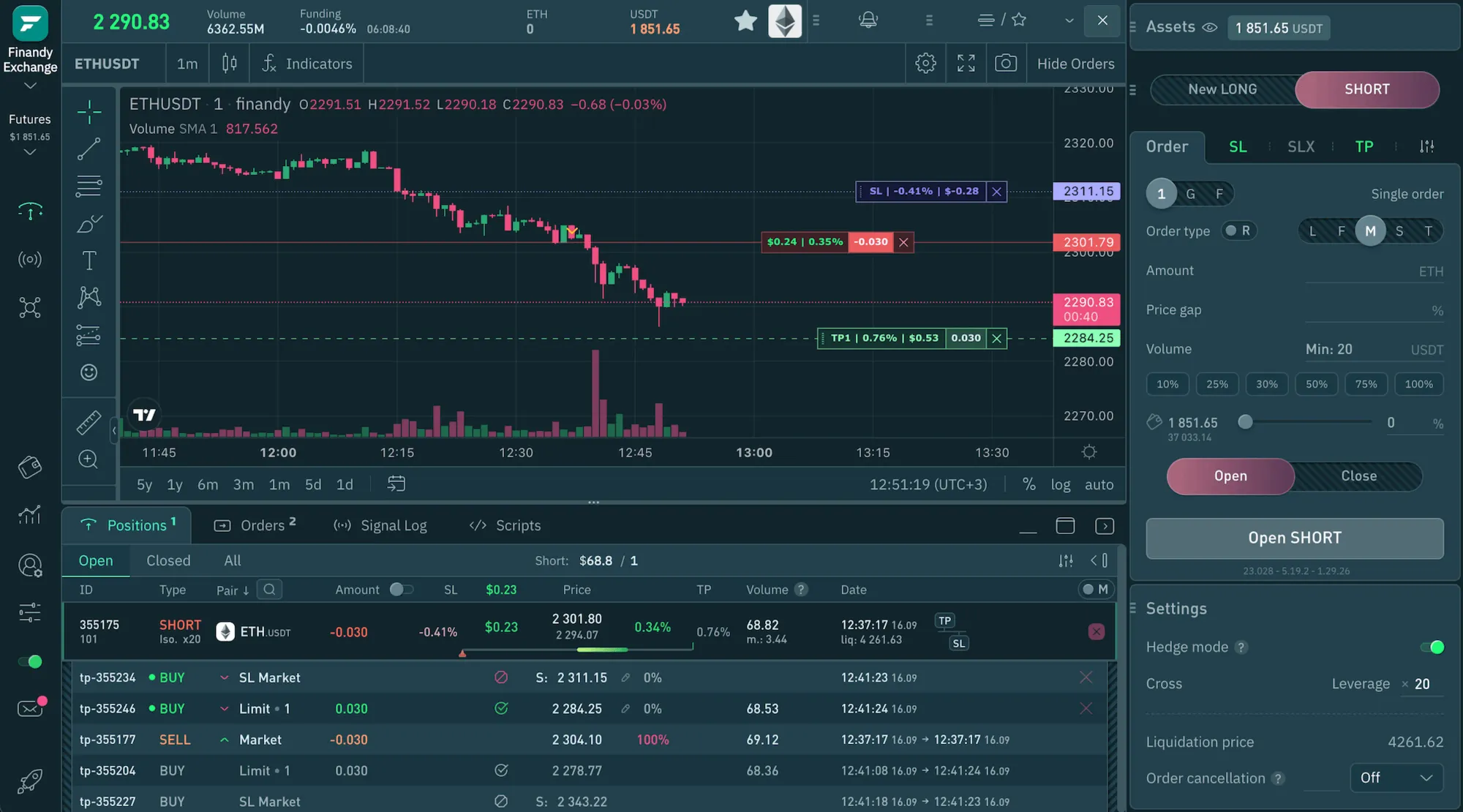
Trading takes place through a single trading terminal. No manual copies. No delays. No discrepancies in entry price.
How copy trading works in Finandy
Finandy is not just a signal aggregator. This is a professional environment where master traders prove their strategies work over time before being listed in the public catalog. You see the entire history of transactions and only then make a decision.

Copy trading Finandy is the new standard for copying trades

Strict selection of master traders
“Profiles with nice numbers” are not included in the public directory.
A master trader first proves the work of his strategy: at a distance, with the history of transactions, with real trading.
Only after this the strategy can be published.
Master trader trades his money
Each master trader invests his own funds in the strategy.
Moreover, his contribution cannot be less than the maximum amount of one investor. This is a fundamental point.
The trader shares the risk equally with the participants. He's in the same position as you

Pay only for new results
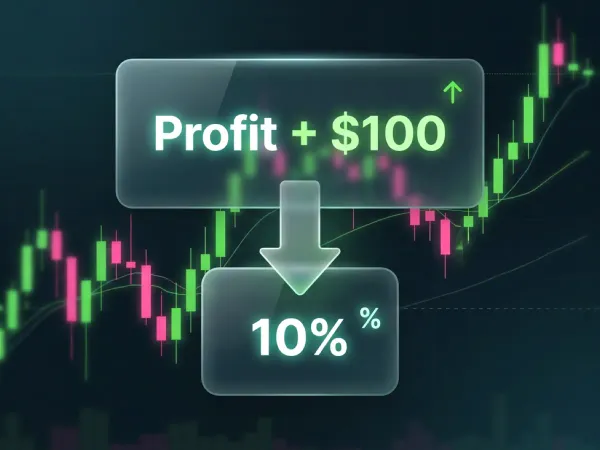
In Finandy, there is no situation where the strategy went into drawdown, then simply “came back” - and they took a commission for it.
The master trader's reward is awarded only for new growth above the previous best result.
Choosing a strategy for copy trading is easy and clear
Clear parameters instead of promises
Each strategy in the catalog shows:
- trading style
- risk level
- historical dynamics
- current positions
- capital size
- connection conditions
The user chooses not “percentages”, but an approach that suits his budget and psychological comfort.
Strategies for different tasks
The catalog contains strategies:
- with moderate trading
- with active entries
- with drawdown control
- for a small deposit
- for larger capital
Copy trading in Finandy is not “one button for all”, but the choice of a managed model
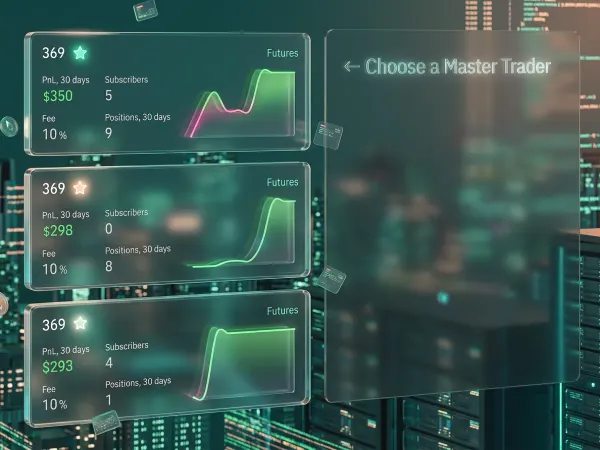
What does an investor get in copy trading Finandy

Are you an experienced trader? Monetize your trade in Finandy
If you trade consistently, you can turn your strategy into a public product
Create a strategy and involve investors
- You trade through the terminal.
- Publish your strategy.
- Gather an audience.
Investors connect and copy your transactions automatically
You decide your own income model
The master trader independently sets:
- profit commission amount
- connection conditions
- format of working with your audience
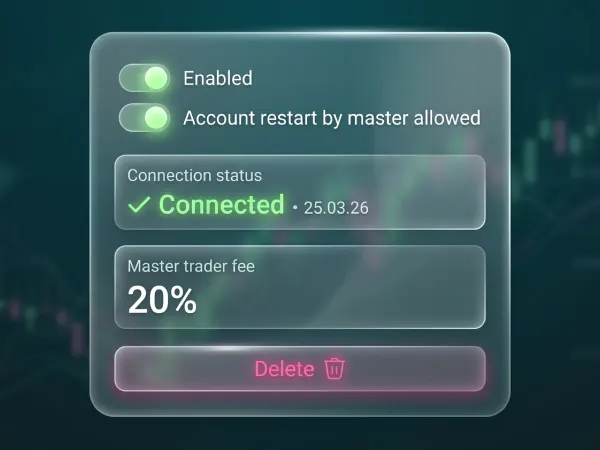
Income is generated transparently, as a percentage of profit
Additional income and cashback
In addition to profit commission, you can receive:
- cashback up to 30% from the total trading volume of your traders
- growth of personal capital within the strategy
- development of a trader’s personal brand
Frequently asked questions about copy trading
Here we have collected answers to the most popular questions about our copy trading. If you haven't found yours, write to our support.
What is copy trading?
Copy trading is a format where the trades of a master trader are automatically repeated in your portfolio.
How does copy trading in Finandy differ from standard services?
Through a unified portfolio, lack of desynchronization, transparent trade history, and a reward system based strictly on new results.
Where are my funds kept?
On your exchange account. The terminal does not hold your funds.
Can I disconnect from a strategy?
Yes. You can exit the strategy at any time.
What happens if the strategy goes into a drawdown?
You see the drawdown in real time and can make a decision. No fee is charged for recovering losses.
How to become a master trader?
Register in the terminal, connect your exchange, and submit your strategy for moderation.
Copy trading in 2026: how it works, what risks to consider and how to choose traders
Copy trading has long ceased to be exotic. In 2026, this is no longer an experiment, but a working investment and active trading tool used by thousands of people around the world. It is suitable for those who want to participate in the market, but are not ready to sit in the terminal around the clock, build strategies and independently support each transaction. At the same time, there are still many myths around copy trading. Some consider it a “money button”, others consider it a guaranteed way to make a loss. The reality, as always, is more complicated. Copy trading involves participation in real trading, with market fluctuations, volatility, drawdowns and trader psychology. It does not eliminate risk, but it changes the role of the user: instead of trading himself, he selects those whose transactions he will copy. Let's figure out what copy trading is, how it works, how it differs from classic trading, and what to look for when choosing a platform and traders. ## What is copy trading and how does it work
To put it simply, copy trading is a format in which a user connects to another person’s strategy and begins to automatically copy his transactions. When the selected trader opens a position on the exchange, it is proportionally opened in the subscriber's account. When deals are closed, the result is synchronously recorded for all participants. Copy trading is part of the social trading trend. It brings investors and professional traders together in one environment where you can track trade history, analyze profitability, drawdown, risk level and trading style. Technically, copy trading works through a special platform or terminal. This can be a built-in exchange module (for example, solutions offered by Binance or Bybit), or separate trading platforms integrated with exchanges and forex accounts. The user selects a trader from the list of available traders, connects to his strategy, sets copying parameters, and after that the system begins to automatically repeat the transactions of the selected trader in real time. ## What exactly is copied and what it looks like in practice
It is important to understand: copying trades is not signals or advice. This is direct participation in trade. The transaction is opened not “manually”, but automatically. Entry price, volume, stop loss, take profit and order type are transmitted to the system and executed on the user's account. ## Copy trading allows you to:
- automatically copy transactions of experienced traders;
- connect to several traders simultaneously;
- distribute capital between different strategies;
- track trader’s transactions in real time;
- see the full history of transactions and statistics. Depending on the copy trading platform, copying can occur either at the level of individual accounts or through a single trading portfolio. In the second case, the investor actually participates in the same trade with the trader, and not in a simulation. ## How copy trading differs from classic trading
Classic trading is independent trading. A person analyzes the market, selects an asset, looks for an entry point, accompanies the transaction and takes on all decisions. Copy trading is a different format of participation. Here the main task is not trading, but choice: choosing traders, analyzing strategies, adjusting parameters, controlling risk and regularly checking results. In essence, the investor begins to work not with the market directly, but with people and their approaches to the market. He invests not only in the asset, but also in the strategy of a particular trader. ## Why copy trading has become a mass tool
There are several reasons. First, the complexity of markets has increased. Cryptocurrencies, forex, derivatives are a high-speed environment where trading is becoming less and less like “buy and wait.” Not every user is ready to understand market models, indicators and transaction psychology. Secondly, automation has developed. Modern platforms allow you to automatically repeat transactions of the selected trader without delays, with flexible settings and control of parameters. Thirdly, copy trading provides an opportunity for learning. By observing the transactions of successful traders, the user begins to better understand the logic of entries, position management and working with risk. ## What risks are there in copy trading
Copy trading does not eliminate market risk. If a trader makes a mistake, all participants in the strategy suffer a loss. Therefore, the illusion of “safe income” is the most dangerous. ## The main risks of copy trading:
- human factor: a trader can change his trading style, violate his own strategy, or go into overtrading;
- market events: sharp volatility, news, liquidations;
- technical limitations of the platform;
- incorrect settings for copying parameters. A separate point is the level of risk. The same trader can be statistically profitable, but work through deep drawdowns. For one investor this is acceptable, for another it is psychologically destructive. Therefore, the user’s task is not to look for the “most profitable” one, but to choose the one whose approach matches your investment goals and acceptable level of risk. ## How to choose a trader for copy trading
The choice of the trader is the key point of the entire system. It is worth paying attention not only to profitability. Much more important:
- stability of results;
- maximum drawdown;
- duration of transaction history;
- trading style (scalping, medium-term, positional trading);
- number and types of transactions;
- reaction to unprofitable periods. Be sure to study the history of transactions, see how the trader behaves during difficult periods. Were there long series of losing trades, how quickly was the balance restored, whether a stop loss is used, how often profits are taken. A good copy trading platform makes it possible to filter available traders by parameters, track statistics in real time and see transactions of other traders without distortion. ## Copy settings: what the user controls
Even with the automatic format, the user does not become a passive observer. Proper setup is half the success. As a rule, you can:
- set the amount of funds for each strategy;
- limit the maximum risk;
- set a global stop for the portfolio;
- choose which assets to copy;
- connect to several traders simultaneously;
- set copying parameters for your deposit. It is important to configure copying parameters before starting. This is where it is decided whether copy trading will be a guided investment tool or a chaotic bet. ## Commissions and Copy Trading interaction model
In copy trading, different monetization models are possible:
- commission for transactions;
- percentage of profit;
- subscription to a trader or strategy;
- fixed platform fee. The most commonly used model is one in which traders receive a percentage of investors’ profits. This is the logic of partnership: the trader is interested in trading steadily, not aggressively. It is important to understand in advance what transaction commissions and service fees are provided by the platform, how they are written off and how they affect the net profitability. ## Copy trading and training
A separate advantage is the opportunity to learn. Watching transactions of experienced traders, the user sees:
- where positions are opened;
- how stop loss and take profit are set;
- how the position is maintained;
- how decisions are made in the event of losses. This turns copy trading from a “black box” into a development tool. If you wish, you can use it as a bridge between investing and independent trading. ## In which markets is copy trading used?
Today copy trading is actively used:
- in the cryptocurrency market;
- Forex;
- on derivatives;
- within the framework of classic trading platforms. Many solutions integrate with exchanges and terminals, including environments built on MetaTrader 4 and MetaTrader 5. This allows you to copy traders’ transactions in a familiar infrastructure and combine copy trading with other trading formats. ## Why the platform is critical
Even a strong strategy can be killed by poor implementation. A quality platform should:
- ensure execution of transactions in real time;
- show transparent statistics;
- allow you to track the actions of the selected trader;
- provide flexible settings;
- support work with several traders;
- record all parameters, transaction history and commissions. The platforms differ in architecture. In some places copying occurs between separate accounts, in others through a single trading mechanism. This affects the accuracy of execution, the synchronization of transactions and the correctness of statistics. ## Who is copy trading suitable for?
Copy trading is a way to enter the market for those who:
- wants to invest, but is not ready to trade on his own;
- looking for an alternative to passive instruments;
- wants to diversify sources of income;
- considers trading as an area to study;
- wants to participate in trading without constant presence at the terminal. However, it is not suitable for those who are not ready to accept a loss as part of the process or count on a guaranteed profit in the future. ## Conclusion
Copy trading in 2026 is not a “profit button” or a marketing gimmick. It is an infrastructure tool that allows an investor to participate in real trading through the strategies of professional traders. It gives access to the market, automation, diversification and experience. But it requires a conscious approach: choosing a trader, setting parameters, controlling risk and regularly analyzing results. Copy trading allows you to trade without trading yourself. But responsibility for choice and strategy always remains on the user’s side.